Showing posts with label Hadiths. Show all posts

Wednesday, November 3, 2021

Sabr is about checking your emotions...


“O believers! Seek comfort in patience and prayer. Allah is truly with those who are patient.”
 [Al Baqarah (2) :153]


 Narrated Anas: The Prophet (ﷺ) said, 

“The real patience is at the first stroke of a calamity.” 

 Reference: Sahih al-Bukhari 1302 In-book reference : Book 23, Hadith 61


Cheqna

Tuesday, February 19, 2013

Allah (Alone) is fully sufficient


Surah Al-Imran (3 : 173)

"That is those to whom people said, “The people have gathered against you; so, fear them.” It increased them in Faith and they said, “Allah is fully sufficient for us, and the best One in whom to trust.” " (verse : 173)


(The saying) "Allaah (Alone) is Sufficient for us, and He is the Best Disposer of affairs (for us)" was said by Ibraahiim `alehi wa salaam when he was thrown into the fire; and it was said by Muhammad (salla Allahu `alehi wa salaam) when they (the hypocrites) said, "Verily, the people (pagans) have gathered against you (a great army), therefore, fear them", but it (only) increased them in Faith and they said "Allaah (Alone) is Sufficient for us, and He is the Best Disposer of affairs (for us)." 


(Hadith : Sahih al-Bukhari )

Monday, December 31, 2012

Muraqabah

Muraqabah is when a person watches over or takes care of his spiritual heart (or soul) knowing that Allah subhanahu wa ta'ala is watching over us.


Allah subhanahu wa ta'ala says,

"...Be assured that Allah knows what is in your hearts. So, fear Him and be assured that Allah is most Forgiving, Forbearing." (Al-Baqarah(2) : 235)

"..And Allah is watchful of every thing" [Al-Ahzab(33) : 52]

"...He is with you wherever you are, and Allah is watchful of whatever you do. (Al-Hadid(57) : 4)


In the hadith of Jibreel alayhis salam when he asked the Beloved Prophet Salla Allahu ta'ala 'alayhi wa Sallam about ihsan (goodness and excellence), the Beloved Prophet Salla Allahu ta'ala 'alayhi wa Sallam replied,

 "Ihsan is to worship Allah as if you see Him, but since we do not see Him we should know that He sees us at all times."

 [Sahih al-Bukhari and Muslim]


The meaning of this hadith is the definition of muraqabah. Namely, the endurance of the servant's knowledge and his conviction and certainty that Allah is watching over his internal and external affairs. To have this knowledge and certainty at all times is called muraqabah. It is the fruit of the servant's knowledge that Allah is his Watcher, Over-seeing him, Hearing his utterances, and Observing all of his deeds at all times.


"Drown deep into yourself and find the secret of life"


The Messenger of Allah Salla Allahu ta'ala 'alayhi wa 'aalihi wa Sallam said:

"Whoever possesses the following three qualities attains the sweetness of faith: To have Allah and His Messenger dearer to him than anything else, to love a person only for the sake of Allah, and to hate to return to kufr after Allah has rescued him from it like he hates to be thrown into fire."

[Sahih al-Bukhari and Muslim]


"Those who believe, and whose hearts find peace in the remembrance of Allah: for without doubt in the remembrance of Allah do hearts find peace. (Al-Rad(13) : 28)


Saturday, May 19, 2012

Go Easy..


One thing we got to change in ourselves strongly is to stop finding faults with others all the time. Nobody is perfect NEITHER OTHERS, NOR WE.


She/he talks like that, walks like that, uses this or that, says something and do something,


...spend a lot, shop a lot, waste a lot, eat a lot, facebooking all the time, watches movies, listens to music, do not train their kids well,


...wears this /that, too rich, too poor, too female, too male, too white, too non-white, too much status, not enough status,


...being too smart, or not smart enough, too tall, too short, too fat, too skinny….


The list goes on and is really endless.


GO EASY….On yourself too and on others too. Let’s stop wasting time always finding faults about others. We rarely say good about others.


Let’s keep a firm check on our tongue not to criticize any Muslim brother or sister of ours.


(Excerpt from an article in FB)


********************

The Quran has commanded believers to refrain from such utterances and statements that may sow enmity and discord among the family or society members. It says:

“Say to My servants that they should only say those things that are best, for Satan does sow dissensions among them, for Satan is to man an avowed enemy.” (Al-Quran, Sura Israa, 17:53)


“O you who believe! Avoid much suspicion, in deed some suspicions are sins. And spy not, neither backbite one another. Would one of you like to eat the flesh of his dead brother? You would hate it (so hate backbiting). And fear Allah, verily, Allah is the one who accepts repentance, Most Merciful.” (Al-Quran, Surah Hujrat, 49:12)


The Prophet Muhammad (peace be upon him) has been reported saying: "Whoever protects his tongue from unlawful utterances and guards his private parts from illegal sexual relations, I shall guarantee him entrance into the Paradise." (Sahih Bukhari: Hadith No 6109)


While, at another place the Prophet (peace be upon him) is asked: “Who is the best Muslim? The Messenger of Allah replied: “He is the one from the evils of whose tongue and hands people are safe." (Sunan Nasai: Hadith No 11726)


"Do you know what backbiting is?" They said, "Allah and His Messenger know best." He then said, "It is to say something about your brother that he would dislike." Someone asked him, "But what if what I say is true?" The Messenger of Allah said, "If what you say about him is true, you are backbiting him, but if it is not true then you have slandered him." (Sahih Muslim: Haidth No 2589).


*****************


Posting : Surah Al-Humazah / ... Tongue...(Lisan) - Link (here)

Monday, February 13, 2012

You are the author

“You are the author of your own book. So make sure its worth reading on the day of judgement.” (Anonymous quote)


[Soorah Al-Israa, v:13-14]

“And We have fastened every man’s deeds to his neck, and on the Day of Resurrection, We shall bring out for him a book which he will find wide open. (It will be said to him): “Read your book. You yourself are sufficient as a reckoner against you this Day”. [soorah Al-Israa, v:13-14]


Dan tiap-tiap seorang manusia Kami kalongkan bahagian nasibnya di lehernya dan pada hari kiamat kelak Kami akan keluarkan kepadanya kitab (suratan amalnya) yang akan didapatinya terbuka (untuk di tatapnya). (13) (Lalu Kami perintahkan kepadanya): Bacalah Kitab (suratan amalmu), cukuplah engkau sendiri pada hari ini menjadi penghitung terhadap dirimu (tentang segala yang telah engkau lakukan). (14)


"On the day when their tongues, their hands, and their feet will bear witness against them as to their actions". surat An-Nur, (verse 24).

Also Allah (S.W.T.) says what could be translated as, "And they will say to their skin:" Why did you bear witness against us? "They will say "Allah has caused us to speak, as He cause all things to speak." ( Surat Al-Fussillat, Verse 21)


The Messenger described the questioning in a speech reported by Imam Muslim that the prophet Muhammad (S.A.W.) said:

"Allah (S.W.T.) will meet a person and ask him: "O person, Wasn't I generous with you, and made you with a spouse, and made the horses and camels at your disposal? The servant will reply "yes"! Allah (S.W.T.) will then ask “Did you think that you will meet Me?” He will reply: "No!" Allah (S.W.T.) will say: "I will forget you like you forgot Me"!

Then Allah (S.W.T.) will meet another person and his reply will be the same as the first person.

Then Allah (S.W.T.) will meet a third person and will ask similar questions, and the person's reply will be: "O Lord I believed in you, in your books, and in your messengers. I prayed, I fasted, and I gave charity. And he will praise Allah as much as he can.

Allah (S.W.T.) will say: "Hold on to your words, Now We will bring the witnesses. The person will ask himself “Who will testify against me?”

Then that persons mouth will be sealed, and his thighs, flesh and bones will be asked to speak. They will speak about his bad deeds. He will know that he has no excuse.

That is the hypocrite Allah (S.W.T.) will be furious with!”


We will be asked in the Day of Judgement about five things.

The prophet Muhammad (S.A.W.) said:

“The son of Adam will not pass away from Allah until he is asked about five things: how he lived his life, and how he utilized his youth, with what means did he earn his wealth, how did he spend his wealth, and what did he do with his knowledge.”

{Good hadith reported by Imam At-Tirmithi}

Monday, January 30, 2012

Increase of Provision through Forgiveness

A) Hasan al Basri -Rahimullaah- mentioned:

‘That a man complained to him concerning drought so it was said seek forgiveness from Allaah, another complained about another matter so it was said seek forgiveness from Allaah, another complained about lack of rain for his land so it was said seek forgiveness from Allaah another complained of no offspring so it was said seek forgiveness from Allaah, then he (Hasan al Basri) recited.

ٱسۡتَغۡفِرُواْ رَبَّكُمۡ إِنَّهُۥ كَانَ غَفَّارٗا ١٠ يُرۡسِلِ ٱلسَّمَآءَ عَلَيۡكُم مِّدۡرَارٗا ١١ وَيُمۡدِدۡكُم بِأَمۡوَٰلٖ وَبَنِينَ وَيَجۡعَل
لَّكُمۡ جَنَّٰتٖ وَيَجۡعَل لَّكُمۡ أَنۡهَٰرٗا ١٢

"Ask forgiveness of your Lord. Indeed, He is ever a Perpetual Forgiver. He will send [rain from] the sky upon you in [continuing] showers, And give you increase in wealth and children and provide for you gardens and provide for you rivers."

[Soorah Nuh: 10-12]

[Taken from: ‘Fath al-Bari’ Chapter: the Best Method of Seeking forgiveness]


B) al-Hafidh Emaad ad-Deen Isma’eel Ibn Katheer (d. 774 A.H.) -Rahimullaah- said in his Tafseer about the previous Ayaat:

‘If you repented to Allaah and sought forgiveness from Him and showed obedience to Him your Rizq (provision) would increase and rain would fall from the blessings of the skies, and the blessings of the earth would spring forth, crops would grow for you. You will be given abundant livestock. You will be aided with wealth and offspring; meaning that offspring and wealth would be given to you. And you will be given gardens that have numerous types of fruits and through out there will be rivers that flow in these gardens. This is the way of giving Dawa’ by encouragement.’


[Taken from: ‘Tafseer al-Qur’aan al-Atheem’ 4/p.536]


C) It is narrated from Abi Saeed Al-Khudri that the Messenger of Allaah -sallAllaahu alayhi wa sallam- said: ‘Whoever performs Wudu and then says:

‘ Subhanaka Allahuma wabihamdika la ilaha ila anta astaghfiruka wa atooboo ilaika’

(‘Far are You O Allaah from imperfection, and You have all praise, there is none worthy of worship in truth except You, I seek forgiveness from You and I repent to You),

then this reward is written in a parchment and it is stamped with a seal and no falsehood can break it until the day of Judgment.’


[Taken from ‘Silsilah as-Saheehah’ No. 2333 declared Hasan by Shaykh al-Albaani]

Friday, December 2, 2011

10 Muharram (day of 'Aashooraa’)


The Prophet sallAllaahu 'Alayhi wa sallam said: “by fasting the day of 'Ashuraa’, I hope that Allaah will accept it as expiation for the year that went before.”

09 Muharram = Sunday, 4th December 2011

10 Muharram (day of 'Ashuraa) = Monday, 5th December 2011


wAllahu'alam..


[Expiation = the act of atoning for sin or wrongdoing (especially appeasing a deity)]

Thursday, October 27, 2011

Perfect days for perfect Ibaadah

By Asma bint Shameem
(From my mail box - excerpt)


What are these magnificent days?

These blessed days are the first ten days of Dhul-Hijjah.

Just like the last ten nights of Ramadaan are the best ten nights out of the whole year, the Ulama tell us that out of the 365 days of the year, these first ten days of Dhul-Hijjah are the best days of the year and the most beloved to Allaah as they combine acts of worship in a way unlike any other times.

The Prophet testified to that. He said: "There are no days in which righteous deeds are more beloved to Allaah than these ten days." The people asked, "Not even jihaad for the sake of Allaah?" He said, "Not even jihaad for the sake of Allaah, except in the case of a man who went out to fight giving himself and his wealth up for the cause, and came back with nothing." (Bukhaari)

Subhaan Allaah wal-Hamdulillaah!

What a blessing!

The question is.....what do I do on these magnificent days and how can I make the most of this perfect, golden, golden opportunity to earn rewards and Jannah?

Obviously, Hajj is one of the best deeds that one can do during these ten days. However for those of us who were not invited to His House this year, there are still many, many good deeds that one can do and earn the Pleasure of Allaah.

Some of these are:

1) Fast all nine days and especially fast the Day of 'Arafah

The Prophet said: "Anyone who fasts for one day for Allah's pleasure, Allah will keep his face away from the (Hell) fire for (a distance covered by a journey of) seventy years." (Bukhari, Muslim)


The Prophet used to fast on the ninth day of Dhu'l-Hijjah and he said: "Fasting the Day of 'Arafah (ninth Dhul-hijjah) is an expiation for (all the sins of) the previous year and an expiation for (all the sins of) the coming year." (Muslim)


2) Do a LOT of Dhikr and Takbeer

The Prophet said: "There are no days on which good deeds are greater or more beloved to Allaah than on these ten days, so recite much Tahleel (saying Laa ilaaha ill-Allaah), Takbeer (saying Allaahu akbar) and Tahmeed (saying al-hamdu Lillaah)." (Ahmad -Saheeh)

Ibn 'Umar and Abu Hurayrah used to go out in the marketplace during the first ten days of Dhu'l-Hijjah, reciting Takbeer, and the people would recite Takbeer when they heard them. (Bukhaari)


Takbeer at this time is a Sunnah that has mostly been forgotten, especially during the first few days. So say it in the masjid, in your home, on the street and every place where it is permitted to remember Allaah. Revive the Sunnah that have been virtually forgotten and earn great rewards for doing so.


The Prophet said: "Whoever revives an aspect of my Sunnah that is forgotten after my death, he will have a reward equivalent to that of the people who follow him, without it detracting in the least from their reward." (Tirmidhi- a hasan hadeeth)


Obviously, men should recite these phrases out loud, and women should recite them quietly.


3) Stand in Night Prayers:


Remember the virtues of spending the night in prayer, and its sweetness in Ramadan?! Why not revive this beautiful act of worship during these nights as well?!


Remember, how in the last third of every night, Allah Almighty calls out to us, His servants:

"Is there anyone to invoke Me, so that I may respond to his invocation? Is there anyone to ask Me, so that I may grant him his request? Is there anyone seeking My forgiveness, so that I may forgive him?"


4)Make Sincere Repentance.

One of the best and most important things to do during these ten days is to repent sincerely to Allaah and to give up all kinds of disobedience and sin right away because we do not know when we will die, and also because one evil deed leads to another.

But what does 'repentance' exactly mean?

It means that you come back to Allaah and give up all the deeds, open and secret, that He dislikes.... that you regret whatever you did in the past, giving it up immediately and be determined never ever, to return to it, and resolve to adhere firmly to the Truth by doing whatever Allaah loves.


"But as for him who repented, believed and did righteous deeds, then he will be among those who are successful." [al-Qasas 28:67]


5) Come back to the Qur'aan

It is time now to dust off your copy of the Qur'aan and return to its refuge.Make it a daily habit, using these 10 days the beginning of a strong and beautiful relationship with it. Read it with meaning, understand it, and then implement it and change your lives for the better, as much as you can.

Remember that reading one letter of the Qur'aan earns you 10 rewards.

In this way, reading Surat Al-Fatihah,which doesn't take more than two minutes will give you more than one thousand rewards!

This is on ordinary days, so what about these magnificent days! Certainly the reward will be far greater, Insha Allaah.


6) Generally increase in doing ALL good deeds

We should strive in doing more good deeds in general, because good deeds are loved by Allaah and will bring us closer to Him. So if we are not able to go to Hajj this year, we should occupy ourselves during these blessed days by worshipping Allaah, praying extra prayers, reading Qur'aan, remembering Allaah, sending Salaams on the Prophet , making dua, giving charity, honoring our parents, upholding ties of kinship, enjoining what is good and forbidding what is evil, and other good deeds and acts of worship.


"So whosoever does good equal to the weight of an atom, shall see it; And whosoever does evil equal to the weight of an atom, shall see it."[al-Zalzalah 99:7-8]


7) Get the reward of Hajj wherever you are:

You may be unable to do Hajj this year, and you may feel sad because you are deprived of the great reward of Hajj. But you can achieve a similar reward in whatever place you may be.


The Prophet said: "Whoever prays Fajr Prayer in congregation, and then sits and remembers Allah until the sun rises, then (after a while) prays two rak'as, he will gain a reward equal to that of making perfect Hajj and Umrah." [He repeated the word "perfect" thrice.] (At-Tirmidhi)

Isn't that easy, Alhamdulillah?


8) Slaughter an animal and distribute the meat

Ibn Umar said: The Prophet lived in Madeenah for 10 years and every year he slaughtered an animal." (Ahmad-Saheeh by al-Albaani)


9) Attend Eid prayers

But remember that Eid prayer is a form of worship and we shouldn't be doing things that are unIslaamic (especially) during these times, such as listening to music, women going out for prayer without proper Hijaab, mixing of men and women, etc.


10) Thank Allaah

One of the biggest forms of worshipping Allaah Subhaanahu wa Ta'ala is to thank Him, deeply, sincerely and continuously. After all, it is He who gave you every single thing that is in you, on you or around you. In fact, you wouldn't even be here if it wasn't for the Mercy of your Creator.


So thank Him for ALL that He gave you, the Islaam that He gave you, the very life He gave you. And thank Him for the chance that He gives you in these ten days, to ask for forgiveness and guidance.


Alhamdulillah, there is much to be gained in these days. So make the most of this perfect opportunity offered by these invaluable and irreplaceable ten days.


Hasten to do good deeds and appreciate this blessing and make the most of it, striving hard in worship .


"And worship your Lord until there comes unto you the certainty (death)." [al-Hijr 15:99]

Sunday, October 9, 2011

A beautiful Hadeeth about Hajj


It is narrated on the authority of Ibn 'Umar - radiAllaahu 'anhuma - who said: I was
sitting with the Prophet - sallAllaahu 'alayhi wa sallam - in the Masjid in Mina when a man from the Ansaar came and a man from the Thaqeef, they gave salaams and said, "O Messenger of Allaah, we came to ask you questions."


So the Messenger (Sal Allaahu Alaiyhi wa Sallam) said: "If you want I can inform you why you came and what you want to ask, and I will do so, and if you want I will hold back and you can ask me and I will answer you."


They said: "Tell us O Messenger of Allaah!"


The man from Thaqeef said to the Ansaari: "Ask." So the Ansaari man said: "Inform me O Messenger of Allaah!"


The Messenger of Allaah (Sal Allaahu Alaiyhi wa Sallam) said: "You came to me, to ask about leaving your house and aiming for the Bait-ul-Haraam and the reward for it; about praying two Rakah after Tawaaf and the reward for it; going between as-Safa and Marwa and the reward for it; your staying the evening in Mina, and the reward for it; stoning the Jamarah and the reward for it; slaughtering an animal and the reward for it; and the Tawaaf of al-Ifaadh."


The man said: "I swear by the One who sent you with the truth! This is what I came to ask you about."


The Prophet (Sal Allaahu Alaiyhi wa Sallam) said: "As for you leaving your homes aiming for the Bait-ul-Haraam: then your she-camel does not place its foot nor does it raise it except that Allaah writes for you a reward due to it, and wipes off one of your sins.


As for the two Rakaah after the Tawaaf, then it is equivalent to freeing a slave from the Children of Ismaeel.


As for your circuiting of as-Safa and al-Marwa, then it is the same as freeing 70 slaves.


As for you staying till the evening in Arafah, then Allaah descends to the sky of the Duniya and He boasts about you to the Angels, and says: 'My slaves have come to Me, looking rough, from every deep valley hoping for My mercy, so if their sins were equivalent to the amount of sand or the drops of rain or like the foam on the sea I will forgive them. So go forth My slaves! Having forgiveness and for what or who you have interceded for.'


As for stoning the Jamaar (the pillars), then for every stone that you throw, it removes a big sin from the deadly sins.


As for your slaughtering, then it is saved for you with your Lord.


As for shaving your head, then there is a reward for every strand of hair that you shaved, and a sin is wiped off by it.


As for you performing Tawaaf of the House after all this, then by this time you are performing Tawaaf with no sin upon you and an Angel comes and places his hand between your shoulders saying:"Perform good deeds in what you face of the future, for verily your past sins have been forgiven."


(Reported by at-Tabarani in his book "al-Kabeer" and by al-Bazaar. Shaykh Al-Albaanee graded it Hassan. Taken from 'Saheeh al-Targheeb wa Tarheeb'. Volume 2, Page 9-10,hadeeth no. 1112)

Friday, July 29, 2011

The obligation of the fast of Ramadhaan and it's time

Fasting in Islam is one of its great (important) pillars, without which one's religion is incomplete.


Al-Baqarah (183 - 185)


183. O ye who believe! Fasting is prescribed to you as it was prescribed to those before you, that ye may (learn) self-restraint,


184. (Fasting) for a fixed number of days; but if any of you is ill, or on a journey, the prescribed number (Should be made up) from days later. For those who can do it (With hardship), is a ransom, the feeding of one that is indigent. But he that will give more, of his own free will,- it is better for him. And it is better for you that ye fast, if ye only knew.


185. Ramadhan is the (month) in which was sent down the Qur'an, as a guide to mankind, also clear (Signs) for guidance and judgment (Between right and wrong). So every one of you who is present (at his home) during that month should spend it in fasting, but if any one is ill, or on a journey, the prescribed period (Should be made up) by days later. Allah intends every facility for you; He does not want to put to difficulties. (He wants you) to complete the prescribed period, and to glorify Him in that He has guided you; and perchance ye shall be grateful.


The Prophet (sal-Allaahu `alayhe wa sallam) said:


((Whoever fasts during the month of Ramadhaan, out of sincere faith and hoping to attain Allaah's rewards, then all his previous sins will be forgiven)).


The Prophet (sal-Allaahu `alayhe wa sallam) also said:

((When the month of Ramadhaan starts, the gates of the Heaven are opened and the gates of Hell are closed and the devils are chained)).


The Prophet (sal-Allaahu `alayhe wa sallam) also said:

((Fasting is a shield or protection from the fire and from committing sins. If one of you is fasting, he should avoid sexual relation with his wife and quarrelling, and if somebody should fight or quarrel with him, he should say, "I am fasting")).


The Prophet (sal-Allaahu `alayhe wa sallam) also said (on the authority of Allaah):

((All the deeds of the son of Aadam are for for himself; a good deed is eqaul to ten times it's equivalent except fasting, for certainly it is for Me, and I will give the reward for it. He left his desires, his food, his drink for My sake. There are two pleasures for the fasting person, one at the time of breaking his fast, and the other at the time when he will meet his Lord. The unpleasant smell coming from the mouth of a fasting person is more pleasant to Allaah than the smell of musk)).


The Prophet (sal-Allaahu `alayhe wa sallam) used to announce the good news of the arrival of the month of Ramadhaan to his companions, and would say to them:

((The month of Ramadhaan has come to you. It is the month of blessings. During this month, Allaah sends down mercy, ones mistakes are forgiven, supplications are answered and Allaah praises you in the presence of His angels, so show Allaah your virtues. For certainly the unfortunate individual is he who is prohibited from the mercy of Allaah)).


The Prophet (sal-Allaahu `alayhe wa sallam) said:

(One who does not abandon evil talk and actions, then Allaah is not in need of him abandoning his food and drink (i.e. his fasting)).


(Ref : Fatwa-online)


"Have a blessed month of Ramadhan"

Thursday, June 9, 2011

The Importance of Islamic Knowledge

 ~ Taken from facebook, posted by a friend : AllhumdulilahForEverything @ http://www.facebook.com/AllhumdulilahForEverything


"If Allah wants to favor someone, He grants him comprehension of this religion." [Sahih Bukhari vol.1 # 71, Tirmidhi and Musnad Ahmad]


"The example of guidance and knowledge with which, Allah has sent me is like abundant rain falling on the earth, some of which was fertile soil, absorbed rain water and brought forth vegetation and grass in abundance. And another portion of it was hard and held the rainwater and Allah benefited the people with it and they utilized it for drinking, making their animals drink from it and for irrigation of the land for cultivation. And a portion of it was barren which, could neither hold the water nor bring forth vegetation (then that land gave no benefits).

The first is the example of the person who comprehends Allah’s religion and gets benefit (from the knowledge), which Allah has revealed through me (the Prophet) and learns and then teaches others. The last example is that of a person who does not care for it and does not take Allah’s guidance revealed through me (He is like that barren land.)”

[Sahih Al-Bukhari v.1 no.79. Narrated by Abu Musa]


“It is only those who have knowledge amongst His slaves that fear Allah.”

[Soorah Al-Fatir (35): 28]


“Seek knowledge, because seeking it for the sake of Allah is a worship. And knowing it makes you more fearing of Allah; and searching for it is jihad, teaching it to those who do not know is charity, reviewing and learning it more is like tasbeeh. Through knowledge Allah will be known and worshipped. With the knowledge Allah will elevate people and make them leaders and imams, who will in turn guide other people.”

[Fatawa Ibn Taymiyya vol.10, p.39]


“Whoever treads on a path in search of Islamic knowledge, Allah will ease the way to Paradise for him. The angels will lower their wings, pleased with this seeker of knowledge, and everyone in the heavens and on earth will ask forgiveness for the knowledgeable person, even the fish in the deepest of waters will ask for his forgiveness”

[Abu Dawud, Ibn Majah, Tirmidhi # 2835-sahih hadith]


“He whom death overtakes while he is engaged in acquiring knowledge with a view to reviving Islam with the help of it, there will be one degree between him and the Prophets in Paradise .”

[Al-Tirmidhi Hadith no. 249. Narrated by Al-Hasan al-Basri]


*********

(Note : I hope the owner of the said FB does not mind me sharing his/her posting here)

Sunday, May 8, 2011

Thank You Very Much O Allah

I heard Allah's Prophet (peace be upon him) saying, "Allah divided Mercy into one-hundred parts and HE kept its ninety-nine parts with HIM and sent down its one part on the earth, and because of that, its one single part, HIS creations are merciful to each other, so that even the mare lifts up its hoofs away from its baby animal, lest it should trample on it."


(Author : Abu Huraira)


*********


(Sang by Minik Dualar, a group of children from Turkey)


THANK YOU VERY MUCH O ALLAH (lyrics)


THANK YOU VERY MUCH O ALLAH
I LOVE YOU SO MUCH O ALLAH

YOU'RE THE RICHEST
YOU'RE THE GREATEST
YOU'RE THE GENEROUS O ALLAH
YOU'RE THE LOVER
YOU'RE THE BELOVED
YOU'RE THE ONE O ALLAH
(Repeat)

I TOOK A ROSE IN MY HAND
YOU GAVE ME THE EYES TO SEE
YOU GAVE ME THE NOSE TO SMELL
YOU GAVE ME THE HANDS TO HOLD

THANK YOU VERY MUCH O ALLAH
I LOVE YOU SO MUCH O ALLAH

YOU'VE GIVEN ME TWO EARS
TO HEAR THE VOICE OF MY MUM
I'VE LEARNT PRAYER FROM MY MUM
YOU'VE GIVEN ME TONGUE TO SAY

THANK YOU VERY MUCH O ALLAH
I LOVE YOU SO MUCH O ALLAH


**********

Friday, December 10, 2010

Virtues of Allah’s sacred month of Muharram (Pt. 2)

@@@@@@@@@@@@@@@@@@@

Written by towardshuda


The virtues of fasting Aashooraa


Ibn Abbaas radi Allaahu Anhu said: “I never saw the Messenger of Allaah sallAllaahu Alayhi wa sallam so keen to fast any day and give it priority over any other than this day, the day of Aashooraa’, and this month, meaning Ramadaan.”


The Prophet sallAllaahu Alayhi wa sallam said: “For fasting the day of Aashooraa’, I hope that Allaah will accept it as expiation for the year that went before.”


This is from the bounty of Allaah towards us: for fasting one day He gives us expiation for the sins of a whole year. And Allaah is the Owner of Great Bounty.


Not relying too much on the reward for fasting it:


Some people who are deceived rely too much on things like fasting on Aashooraa’ or the day of Arafaah, to the extent that some of them say, “Fasting on Aashooraa’ will expiate for the sins of the whole year, and fasting on the day of Arafaah will bring extra rewards.”


Ibn al-Qayyim said: ‘This misguided person does not know that fasting in Ramadaan and praying five times a day are much more important than fasting on the day of Arafaah and Aashooraa’, and that they expiate for the sins between one Ramadaan and the next, or between one Friday and the next, so long as one avoids major sins. But they cannot expiate for minor sins unless one also avoids major sins; when the two things are put together, they have the strength to expiate for minor sins.


Which day is Aashooraa’?


Ibn Abbaas said: ‘The Messenger of Allaah sallAllaahu Alayhi wa sallam commanded us to fast Aashooraa’, the tenth day of Muharram.”


It is mustahabb (encouraged) to fast Taasooaa’ with Aashooraa’:


Abd-Allaah ibn Abbaas radi Allaahu Anhuma said: “When the Messenger of Allaah sallAllaahu Alayhi wa sallam fasted on Aashooraa’ and commanded the Muslims to fast as well, they said, ‘O Messenger of Allaah, it is a day that is venerated by the Jews and Christians.’ The Messenger of Allaah sallAllaahu Alayhi wa sallam said, ‘If I live to see the next year, insha’ Allaah, we will fast on the ninth day too.’ But it so happened that the Messenger of AllaahsallAllaahu Alayhi wa sallam passed away before the next year came.”


Al-Shaafaee and his companions, Ahmad, Is-haaq and others said: “It is mustahabb to fast on both the ninth and tenth days, because the Prophet sallAllaahu Alayhi wa sallam fasted on the tenth, and intended to fast on the ninth.”


On this basis it may be said that there are varying degrees of fasting Aashooraa’, the least of which is to fast only on the tenth and the best of which is to fast the ninth as well. And the more one fasts in Muharram, the better it is.


Bidaahs (acts not from sunnahs) common on Aashooraa’:


Some are wearing kohl, taking a bath (ghusl), wearing henna, shaking hands with one another, cooking grains (huboob), showing happiness….


They also reported a fabricated hadeeth that is falsely attributed to the Prophet sallAllaahu Alayhi wa sallam, which says, “Whoever is generous to his family on the day of Aashooraa’, Allaah will be generous to him for the rest of the year.” Reporting all of this from the Prophet sallAllaahu Alayhi wa sallam is tantamount to lying.’


Nothing to that effect has been reported in any saheeh hadeeth from the Prophet sallAllaahu Alayhi wa sallam or from his Companions. None of the imaams of the Muslims encouraged or recommended such things, neither the four imaams, nor any others. No reliable scholars have narrated anything like this, neither from the ProphetsallAllaahu Alayhi wa sallam nor from the Sahaabah, nor from the Taabieen; neither in any saheeh report or in a daeef (weak) report.


We ask Allaah to make us followers of the Sunnah of His Noble Prophet and may Allaah bless our Prophet Muhammad and all his family and companions...amiin.


Extracted from Booklet by Shaykh Saleh Munajjid
Islamqa.com

Monday, December 6, 2010

Virtues of Allah’s sacred month of Muharram (Pt. 1)

@@@@@@@@@@@@@@@@

Written by towardshuda


Praise be to Allaah, the Lord of the Worlds, and peace and blessings be upon our Prophet Muhammad, the Seal of the Prophets and Chief of the Messengers, and upon all his family and companions.


Allaah’s sacred month of Muharram is a blessed and important month. It is the first month of the Hijri calendar and is one of the four sacred months concerning which Allaah says (interpretation of the meaning):


“Verily, the number of months with Allaah is twelve months (in a year), so it was ordained by Allaah on the Day when He created the heavens and the earth; of them, four are sacred. That is the right religion, so wrong not yourselves therein…” [soorah at-Tawbah, v:36]


It was reported that Ibn Abbaas said that this phrase (so wrong not yourselves therein…) referred to all the months, then these four were singled out and made sacred, so that sin in these months is more serious and good deeds bring a greater reward.


The Virtue of observing more naafil fasts during Muharram:


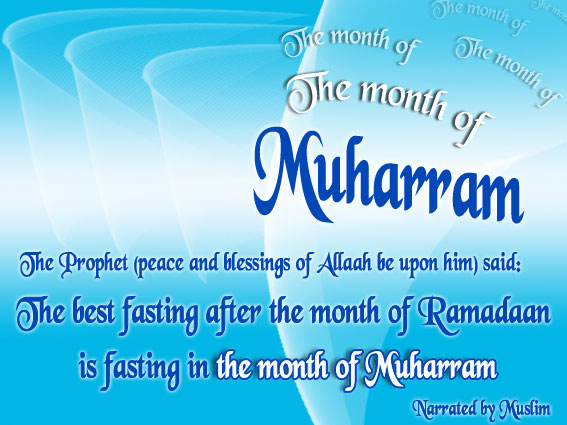
Abu Hurayrah radi Allaahu Anhu said: “The Messenger of Allaah sallAllaahu Alayhi wa sallam said: ‘The best of fasting after Ramadaan is fasting Allaah’s month of Muharram.’”


The phrase “Allaah’s month”, connecting the name of the month to the name of Allaah in a genitive grammatical structure, signifies the importance of the month.


This hadeeth is probably meant to encourage increasing one’s fasting during Muharram, without meaning that one should fast for the entire month.

Sunday, December 5, 2010

The twelve months in Hijrah Year

**************************


The Islamic year has twelve months that are based on a lunar cycle.

Allah says in the Qur'an:

"The number of months in the sight of Allah is twelve (in a year) - so ordained by Him the day He created the heavens and the earth...." (At-Tawbah(9):36).

"It is He Who made the sun to be a shining glory, and the moon to be a light of beauty, and measured out stages for it, that you might know the number of years and the count of time. Allah did not create this except in truth and righteousness. And He explains His signs in detail, for those who understand" (Yunus(10):5).


And in his final sermon before his death, the Prophet Muhammad(peace be upon him) said, among other things,

"With Allah the months are twelve; four of them are holy; three of these are successive and one occurs singly between the months of Jumaada and Sha'ban."


Islamic months begin at sunset of the first day, the day when the lunar crescent is visually sighted. The lunar year is approximately 354 days long, so the months rotate backward through the seasons and are not fixed to the Gregorian calendar.


Bulan bulan Islam
(The months in Hijrah year)


The months of the Islamic year are:


1. Muharram ("Forbidden" - it is one of the four months during which it is forbidden to wage war or fight)

2. Safar ("Empty" or "Yellow")

3. Rabia Awal ("First spring")

4. Rabia Thani ("Second spring")

5. Jumaada Awal ("First freeze")

6. Jumaada Thani ("Second freeze")

7. Rajab ("To respect" - this is another holy month when fighting is prohibited)

8. Sha'ban ("To spread and distribute")

9. Ramadan ("Parched thirst" - this is the month of daytime fasting)

10. Shawwal ("To be light and vigorous")

11. Dhul-Qi'dah ("The month of rest" - another month when no warfare or fighting is allowed)

12. Dhul-Hijjah ("The month of Hajj" - this is the month of the annual pilgrimage to Mecca, again when no warfare or fighting is allowed)


(http://islam.about.com/cs/calendar/a/hijrah_calendar.htm)

Tuesday, November 30, 2010

Allah's Messengers and Prophets

************************


Allah states in the Holy Qur`ān,


"And We did not send any Messenger before you (O Muhammad SAW) but We revealed to him (saying): Lâ ilâha illa Ana [none has the right to be worshipped but I (Allâh)], so worship Me (Alone and none else)." [Al-Anbiyaa'(21):25]


It is our belief that Allah has sent a prophet to every nation and not necessarily to every generation. Allah has mentioned in the Qur'an,


"And verily, We have sent among every Ummah (community, nation) a Messenger (proclaiming): "Worship Allâh (Alone), and avoid (or keep away from) Tâghût[] (all false deities, etc. i.e. do not worship Tâghût besides Allâh)." Then of them were some whom Allâh guided and of them were some upon whom the straying was justified. So travel through the land and see what was the end of those who denied (the truth). "[An-Nahl(16):36]


"Verily! We have sent you with the truth, a bearer of glad tidings, and a warner. And there never was a nation but a warner had passed among them." [Al-Fatir(35):24]


As for the exact number of prophets the Prophet (ṣaw) was asked by Abu Dharr (ra), "O Messenger of Allah! What was the total number of prophets?" the Prophet (ṣaw) replied, "124,000 and from amongst them 315 messengers".


The difference between a prophet and a messenger, is that a messenger is a prophet to whom Allah reveals a new book or law, and orders them to propagate their new law. Whereas a prophet would merely upholds the law and scriptures of previous messengers.


Therefore all messengers are prophets but not all prophets are messengers.


About other prophets and messengers Allah said, "We have told you the story of some Messengers and of others We have not …" (al-Nisa' 4:164)


Allah alone has knowlege of true number and names of messengers and prophets chosen by Him. Allah's guidance to mankind began with Adam (peace be upon him) and was completed with Muhammad (peace be upon him).


In the Quran, Allah SWT has mentioned the twenty-five most prominent messengers and prophets by name:


Adam (Adam)
Idris (Enoch)
Nuh (Noah)
Hud
Salih (Salih)
Ibraheem (Abraham)
Isma'el (Ishmael)
Is'haque (Isaac)
Lut (Lot)
Ya'quob (Jacob)
Yusuf (Joseph)
Shu'aib
Ayyub (Job)
Musa (Moses)
Haroon (Aron)
Dhul-kifl (Ezekiel)
Dawud (David)
Sulaiman (Solomon)
Ilias (Elias)
Al-Yasa (Elisha)
Yunus (Jonah)
Zakariyya (Zechariah)
Yahya (John)
Isa (Jesus, the Messiah (Christ) of Israel)
Muhammad (Ahmad)
peace be upon them all.


Tuesday, November 23, 2010

Why Does Allah SWT Test Us.

@@@@@@@@@@@@@@@@@@@@@@@

A Timely Reminder.

@@@@@@@@@@@@@@@@@@@@@@@


Allah tests His believing servants with various types of crises and disasters in order to:


1) Reveal the Patient from the Impatient:


“And certainly, We shall test you with a bit of fear, hunger, loss of wealth, lives and fruits. But give glad tidings to the patient ones who, when afflicted with a calamity, say: “Truly! To Allah we belong and truly, to Him we shall return.” They are those upon whom are the blessings, descend from their Lord, and they receive His Mercy, and it is they who are guided.” (Surah Al-Baqarah 2:155-157)


“And among mankind is he who worships Allah as if he were upon the very edge (i.e. in doubt); if good befalls him, he is content with it;. But if a trial befalls him, he turns back on his face. He loses both this World and the Hereafter. That is the evident loss.”(Surah al-Haj 22:11)

“So, it is a must for the souls to be nurtured by way of tests, and to be severely tested during the course of the battle between truth and falsehood with fear and hardship, and with hunger and decrease in wealth and life and fruits.

This testing is a necessity so that the believer can give his share of what his belief requires; so that it becomes dear to him in accordance with that he gives for its sake of sacrifice and burden; so that it becomes dear to him in accordance with what he is willing to give for its sake!

The bearers of worthless beliefs that do not require any type of sacrifice will not hesitate to abandon their beliefs at the first sign of hardship. So, the burden here is the personal price that one pays so that this belief becomes dear and valuable in the hearts of its bearers before it becomes dear to the hearts of anyone else.

Whenever they experience pain for its sake, and every single time they are forced to give something up for its sake, it becomes even dearer and more valuable to them, and they become even more honored with it.

With this, nobody else will realize its value until they see how its bearers are tested because of it and how patient they are upon such tests.”


2) Remove Our Sins and Reward the Righteous:


“And, when he was old enough to walk with him, he said: “O my son! I have seen in a dream that I am slaughtering you, so what do you think?” He said: “O my father! Do that which you are commanded, if Allah Wills, you will find me to be of the patient.” Then, when they had both submitted, and he had laid him prostrate on his forehead, and We called out to him: “O Ibrahim! You have fulfilled the dream!” Verily! Such do We reward the good-doers.” (Surah as-Saffat :102-7)


Sa’ad bin Abi Waqqas reported that he asked the Messenger of Allah (SAW): “Which of the people are tested most severely?”

Rasulullah (SAW) replied: “The Prophets, then the righteous, then those who are most like them, then those who are most like them from the people. A man is tested according to his religious commitment. So, if his religious practice is sound, then his testing is increased, and if his religious practice is weak, then his testing is reduced. A servant continues to be tested until he walks the Earth without a single sin on him.”
(Ahmad, Tirmidhi)


3) Purify the Ranks and Distinguish the Righteous from the Wicked:


“Allah will not leave the believers in the state in which you are now until He distinguishes the wicked from the good.” (Surah Al ‘Imrân 3:179)


“And when the believers saw the Confederates, they said: “This is what Allah and His Messenger had promised us, and Allah and His Messenger had spoken the truth,” and it only added to their faith and submissiveness.” (Surah Ahzaab 33:22)


“Allah might make easy the affairs of the people of evil so that they may increase in sin and corruption, and so that they might increase in their buildup of sins and crimes. Then, he may deal with them in this World or the Hereafter – depending on His Wisdom and Decision – on account of this sinister buildup of deeds!

On the other hand, He may also prevent them from ease so that they would increase in evil and sin and crimes and suffocation, eventually losing hope in the Mercy of Allah, resulting in an increase in their buildup of evil and misguidance.

Likewise, Allah can make easy the affairs of the people of good so that they may become established in their righteous actions and carry out as much of them as they can while increasing in their sustenance, so that they may thank Him for these blessings with their hearts, tongues, and pleasant actions. With all of this, they increase in a buildup of good deeds that they rightfully deserve with Allah because of their righteousness and because of the good that Allah Knows is in their hearts.

On the other hand, He may also prevent them from ease in order to observe their patience upon this state, as well as their confidence and hope in their Lord, their relaxation at the realization of His Power, their being pleased with Him as their only Lord – and He is better than all others – resulting in an increase in their buildup of good.”


4) Emphasize the Hardships of This World in Comparison to the Hereafter:


“Blessed is He in Whose Hand is the kingdom, and He is Able to do all things. The One Who has created death and life in order to test you and see which of you is best in deed, and He is the All-Mighty, the Oft-Forgiving.” (Surah al-Mulk 67:1-2)


5) Expose the Reality of the Human Being:


“Verily, We have created man from drops of mixed semen in order to test him, so We made him hearer, seer. Verily, We showed him the way, so he is either grateful or ungrateful.” (Surah al-Insan 76: 2-3)


“Verily, We have made that which is on earth as an adornment for it so that We may test them as to which of them are best in deeds.” (Surah al-Kahf 18:7)


“And it is He Who has made you generations after generations, replacing each other on the earth. And He has raised you in ranks – some above others – that He may test you in that which He has bestowed on you. Surely, your Lord is Swift in retribution, and certainly He is Oft*-Forgiving, Most Merciful.” (Surah al-An’am 6:165)


“A human being is tested so that he may come to know the reality of himself and others. Life is consists of constant testing; testing with what is bad, or testing with what is good.

However, what is best for the believer may be found in what he hates, and what is bad for him may be found in what he likes. The true believer is the one who loves that which Allah has chosen for him.

So, if He tests him with something that he loves, he thanks Him, and if He tests him with that which he hates, he is patient and thanks Him in this case, as well. And Allah – the Glorified – gives the believer in accordance with what will lead to his happiness in either this World or the next.

So, if it is better for him to have something, Allah gives it to him. If it is better for him not to have something, Allah prevents him from having that thing, just as one who is sick is prevented from too much food or water.

Therefore, it is upon a person to completely submit to Allah – the Glorified – in regards to what He has chosen for him, and to be pleased with what Allah has given him, and to understand that if Allah prevents him from something, then it is because Allah wishes to save him from being tested with that thing.”


********************


Maher Zain - Always be there

Video done by emobawang


*********************

Saturday, November 13, 2010

The Heart

@@@@@@@@@@@@@@@@@@@@@


Imaam al-Bukhaaree said:

'Chapter: the saying of the Prophet (sallallaahu-alayhi-wa- sallam): 'I have more knowledge of Allaah than you all.'

And that ma'rifah (knowledge/realization) is an action of the heart about which Allaah the Exalted says:

'But He will call you to account for what your hearts have earned.' [Sooratul-Baqarah 2:225]


Al-Haafidh Ibn Rajab said:

'So hearts will not be corrected until the ma'rifah of Allaah - being in awe of Him, loving Him, fearing Him, relying and trusting in Him, hoping in Him - is not firmly implanted in them.

This is the reality of Tawheed and the meaning of the statement Laa ilaahaa illallaah (None has the right to be worshipped except Allaah).

So the hearts cannot be corrected until Allaah is made the ilaah (deity) to be known, loved, feared and hoped for; and that He becomes the only deity (ilaah) worthy of this - without associating any partners with Him in this.

So know that the world - whatever is above and whatever is below in the waters - will not be corrected, except when the actions of its people are all for Allaah's sake.

Since the actions of the body follow from the actions and intentions of the heart, then when the heart's actions and intentions are only to Allaah alone, then it is corrected, and all the actions of the body will likewise be corrected.

However, if the actions and intentions of the heart are directed to other than Allaah, then it is corrupted, and likewise, all the actions of the body will be corrupted in proportion to how much the heart has been corrupted.'


Knowing The Good And The Evil


Abdullaah Ibn Mas'ood heard a man saying: 'Whoever does not command the good and prohibit the evil is ruined!'

So he replied to the man: 'Whoever does not know the good and the evil in his heart is ruined.'

Al- Haafidh Ibn Rajab al-Hanbalee said: 'Ibn Mas'ood indicates that knowledge of the good and the evil in the heart is an obligation from which no one is exempt. So whoever does not know it is ruined.'

[source: www.troid.org]


Heart of a Muslim
By Zain Bhikha


Looking up at the sky, searching for Allah most High
He rejected the way of worshipping Gods of clay
Prophet Ebrahim knew that Allah was near
And that the heart of a Muslim is sincere

Under the hot burning sun, he declared God is one
Though with stones on his chest, his Imaan would not rest
The Muadhin knew that right would conquer wrong
And the heart of a Muslim must be strong

Chorus:
It's the heart of a Muslim through the guidance of Islam
That makes you fair and kind and helpful to your fellow man
So living as a Muslim means that you must play a part
Allah looks not at how you look, but what is in your heart

In our poor meager state, little food on our plate
Mother said she was glad, always sharing what we had
When I asked how can we share what's not enough
She said the heart of a Muslim's filled with love

He said its time you should know, you will learn as you grow
That some people around will do what's bad to bring you down
Father said to be a star that's shining bright
For the heart of a Muslim does what's right

Chorus

So whatever you, make sure your words are true
Honesty is the best, because life is a test
Even if it hurts so much you want to cry
For the heart of a Muslim does not lie

Monday, November 8, 2010

The month of Dhul Hijjah

@@@@@@@@@@@@@@@@@


What’s So Special About Dhul Hijjah?


The first ten days of this month are full of blessings and are very special for many reasons, as followed:


* Allah swears an oath by these 10 days, and when Allah swears an oath by something it indicates its importance and great benefit.


* Allah says (interpretation of the meaning): “By the dawn; by the ten nights” [al-Fajr 89:1-2].


* Ibn ‘Abbaas, Ibn al-Zubayr, Mujaahid and others of the earlier and later generations said that this refers to the first ten days of Dhu’l-Hijjah. Ibn Katheer said: “This is the correct opinion.” (Tafseer Ibn Katheer, 8/413)


* The Prophet (may peace be upon him) testified that these are the best days of this world and Allah has preferred them over all the other days of the year.


* The Prophet (may peace be upon him) commanded us to recite a lot of Dhikr (remembrance) of Allah, example – Allahu Akbar, La ilaha illallah, Alhamdulillah, Subhaanallah


* These days include the Day of Arafaah, on which Allaah perfected / completed the religion of Islaam and fasting on this day will expiate for the sins of two years. (Don't miss this opportunity!)


* These days include the pilgrims (hujjaj) performing Hajj in Makkah


(The Wuquf in Arafah is one of the pillars of Haj which must be performed)


* These days include the Day of Sacrifice – Eid ul Adhaa


Ibn ‘Abbaas (may Allaah be pleased with him) reported that the Prophet (sallallahu'alayhi wasallam) said:

"There are no days in which righteous deeds are more beloved to Allaah than these ten days.”

The people asked, “Not even jihaad for the sake of Allaah?”

He (sallallahu'alayhi wasallam) said, “Not even jihaad for the sake of Allaah, except in the case of a man who went out to fight giving himself and his wealth up for the cause, and came back with nothing.”

[Hadith Reported by Sahih Al-Bukhaari]


Spread the knowledge and remind about these blessed days to your family & friends.


As Salaamu'Alaykum.

Monday, July 26, 2010

Surah : Al-Kursi

**********************


In the name of Allah the Most Merciful, and Most Compassionate.

Allah

There is no god but He,

The Living, the Everlasting,

Slumber seizes Him not, neither sleep,

To Him belongs all that is in the heavens and the earth.

Who is there that can intercede with His, except by His leave?

He knows what lies before them and what is after them,

And they comprehend not anything of His Knowledge save as He wills.

His throne comprises the heavens and the earth,

The preserving of them fatigues Him not,

And He is the All-High, All-Glorious.


[Al-Quran: Surat al-Baqarah, Ayah 255]


*********************


Ubayy bin Ka'b (radiAllahu anhu) reported:

The Messenger of Allah (peace be upon him) said: "Abu Mundhir! Do you know which Ayah in Allah's Book is the greatest?"

I said: 'Allah and His messenger know best.'

He (peace be upon him) again said: 'Do you know which Ayah in Allah's Book, according to you, is the greatest?'

I (Abu Mundhir) replied: ‘It is 'Allah la ilaha illa Huwal-Hayyul-Qayyum'.[2:255].


Thereupon he (peace be upon him) patted me in the chest and said, ' Rejoice by your knowledge, O Abu Mundhir! (i.e, may this knowledge be a source of respect, honour and benefit to you)'."

[Muslim]


When you lie down in your bed, recite ayat al-Kursi, Allah! La ilaha illa Huwa (none has the right to be worshipped but He), the Ever Living, the One Who sustains and protects all that exists… [al-Baraqah 2:255] until the end of the ayah, then you will have a protector from Allah and no shaytan (devil) will come near you until morning comes.

[Sahih al-Bukhari]


Everything has its pinnacle and the pinnacle of the Qur’an is Surah al-Baqarah. In it there is an ayah which is the greatest in the Qur’an: Ayat al-Kursi

[at-Tirmidhi]

Nuffs

cbox

Recent Visitors

LinkWithin

Related Posts with Thumbnails