(Oleh Ustaz Zawawi Yusof)
SELALU BANGUN SEBELUM SUBUH
Rasulullah mengajak umatnya untuk bangun sebelum Subuh bagi melaksanakan solat sunat, solat fardu dan solat Subuh secara berjemaah.
Hal ini memberi hikmah yang mendalam antaranya mendapat limpahan pahala, kesegaran udara subuh yang baik terutama untuk merawat penyakit tibi serta memperkuatkan akal fikiran.
AKTIF MENJAGA KEBERSIHAN
Rasulullah sentiasa bersih dan rapi. Setiap Khamis atau Jumaat, Baginda mencuci rambut halus di pipi, memotong kuku, bersikat serta memakai minyak wangi.
“Mandi pada hari Jumaat adalah sangat dituntut bagi setiap orang dewasa. Demikian pula menggosok gigi dan pemakai harum-haruman.” (Hadis riwayat Muslim)
TIDAK PERNAH MAKAN BERLEBIHAN
Sabda Rasulullah w yang bermaksud: “Kami adalah satu kaum yang tidak makan sebelum lapar dan apabila kami makan tidak terlalu banyak (tidak sampai kekenyangan).” (Muttafaq Alaih)
Dalam tubuh manusia ada tiga ruang untuk tiga benda: Sepertiga untuk udara, sepertiga untuk air dan sepertiga lainnya untuk makanan.
Bahkan ada satu pendidikan khusus bagi umat Islam iaitu dengan berpuasa pada Ramadan bagi menyeimbangkan kesihatan selain Nabi selalu berpuasa sunat.
GEMAR BERJALAN KAKI
Rasulullah berjalan kaki ke masjid, pasar, medan jihad dan mengunjungi rumah sahabat. Apabila berjalan kaki, peluh pasti mengalir, roma terbuka dan peredaran darah berjalan lancar.
Ini penting untuk mencegah penyakit jantung. Berbanding kita sekarang yang lebih selesa menaiki kenderaan. Kalau mahu meletakkan kenderaan, mesti letak betul-betul di hadapan tempat yang hendak kita pergi.
TIDAK PEMARAH
Nasihat Rasulullah ‘jangan marah’ diulangi sampai tiga kali. Ini menunjukkan hakikat kesihatan dan kekuatan Muslim bukanlah terletak pada jasad, tetapi lebih kepada kebersihan jiwa.
Ada terapi yang tepat untuk menahan perasaan marah iaitu dengan mengubah posisi ketika marah, bila berdiri maka hendaklah kita duduk dan apabila sedang duduk, maka perlu berbaring.
Kemudian membaca Ta’awwudz kerana marah itu daripada syaitan, segera mengambil wuduk dan solat dua rakaat bagi mendapat ketenangan serta menghilang kan gundah di hati.
OPTIMIS DAN TIDAK PUTUS ASA
Sikap optimis memberikan kesan emosional yang mendalam bagi kelapangan jiwa selain perlu banyakkan sabar, istiqamah, bekerja keras serta tawakal kepada Allah s.w.t.
TIDAK PERNAH IRI HATI
Bagi menjaga kestabilan hati dan kesihatan jiwa, semestinya kita perlu menjauhi daripada sifat iri hati. “Ya Allah, bersihkanlah hatiku dari sifat-sifat mazmumah dan hiasilah diriku dengan sifat-sifat mahmudah.”
PEMAAF
Pemaaf adalah sifat yang sangat dituntut bagi mendapatkan ketenteraman hati dan jiwa. Memaafkan orang lain membebaskan diri kita daripada dibelenggu rasa kemarahan.
Sekiranya kita marah, maka marah itu melekat pada hati. Justeru, jadilah seorang yang pemaaf kerana yang pasti badan sihat.
"BAHAGIA sebenarnya bukan MENDAPAT tetapi dengan MEMBERI. Sebenarnya, banyak lagi cara hidup sihat rasulullah.. semoga hati kita semakin dekat dengan Nabi yang amat kita rindukan pertemuan dengannya.."-)
Oleh Ustaz Zawawi Yusof
Showing posts with label Sunnahs. Show all posts
Showing posts with label Sunnahs. Show all posts
Tuesday, February 7, 2017

Friday, December 2, 2011
10 Muharram (day of 'Aashooraa’)

The Prophet sallAllaahu 'Alayhi wa sallam said: “by fasting the day of 'Ashuraa’, I hope that Allaah will accept it as expiation for the year that went before.”
09 Muharram = Sunday, 4th December 2011
10 Muharram (day of 'Ashuraa) = Monday, 5th December 2011
wAllahu'alam..
[Expiation = the act of atoning for sin or wrongdoing (especially appeasing a deity)]
Monday, November 21, 2011
Power of “Istighfar”
(A moving story from the life of Imam Ahmad)
This story about "Istighfar" (seeking forgiveness from Allah) is from the life of Imam Ahmed Bin Hanbal, who is considered as a renowned scholar of Islam and a famous theologian. Imam Ahmed is also considered to be the founder of the Hanbali school of fiqh (Islamic jurisprudence) and is one of the most celebrated Sunni theologians, often referred to as the "Sheikh ul-Islam" or the "Imam of Ahl al-Sunnah."
During his old age, while Imam Ahmed was travelling he stopped by a town. After the prayers, he wanted to stay for the night in the masjid yard because he didn't know anyone in the town. Owing to his humility, he hadn't introduced himself to anyone thinking that if he did, he would be welcomed by many people.
Failing to recognize Ahmed bin Hanbal, the caretaker of the mosque refused to let him stay in the mosque. As Imam Ahmed was quite old, the caretaker had to drag him out of the mosque. On seeing this, a baker from a nearby place felt pity for this man (Imam Ahmed) and offered to be the host to him for the night.
During his stay with the baker, Imam Ahmed observed that the baker would constantly recite Istighfar (seek forgiveness from Allah). Imam Ahmed asked the baker if the constant practice of saying Istighfar had any effect on him. The baker responded by telling Imam Ahmed that Allah had accepted all of his duas (supplications), except one.
When he asked him what dua was it that hadn't been accepted, the baker replied that he had been asking Allah to provide him the privilege to meet the famous scholar Imam Ahmed bin Hanbal.
During his stay with the baker, Imam Ahmed observed that the baker would constantly recite Istighfar (seek forgiveness from Allah). Imam Ahmed asked the baker if the constant practice of saying Istighfar had any effect on him. The baker responded by telling Imam Ahmed that Allah had accepted all of his duas (supplications), except one.
When he asked him what dua was it that hadn't been accepted, the baker replied that he had been asking Allah to provide him the privilege to meet the famous scholar Imam Ahmed bin Hanbal.
On this, Imam Ahmed bin Hanbal said that Allah had not only listened to his dua but had dragged him onto his (the baker's) doorsteps.
[Summarized from Al Jumuah magazine, vol 19, issue 7]
[Summarized from Al Jumuah magazine, vol 19, issue 7]
This story is a reminder of the power of saying Istighfar (seeking forgiveness) frequently. Let's remember that the prophet used to say Istighfar frequently during the day.
Prophet Muhammad(peace be upon him) said,
"If somebody recites it during the day with firm faith in it and dies on the same day before the evening, he will be from the people of Paradise and if somebody recites it at night with firm faith in it and dies before the morning he will be from the people of Paradise."
(Sahih Al-Bukhari, Volume 8, Book 75, Number 318)
ASTAGHFIRULLAAH - اســـــــــتــــــــــغـــفرالـــلـــه
Thursday, October 27, 2011
Perfect days for perfect Ibaadah
By Asma bint Shameem
(From my mail box - excerpt)
What are these magnificent days?
These blessed days are the first ten days of Dhul-Hijjah.
Just like the last ten nights of Ramadaan are the best ten nights out of the whole year, the Ulama tell us that out of the 365 days of the year, these first ten days of Dhul-Hijjah are the best days of the year and the most beloved to Allaah as they combine acts of worship in a way unlike any other times.
The Prophet testified to that. He said: "There are no days in which righteous deeds are more beloved to Allaah than these ten days." The people asked, "Not even jihaad for the sake of Allaah?" He said, "Not even jihaad for the sake of Allaah, except in the case of a man who went out to fight giving himself and his wealth up for the cause, and came back with nothing." (Bukhaari)
Subhaan Allaah wal-Hamdulillaah!
What a blessing!
The question is.....what do I do on these magnificent days and how can I make the most of this perfect, golden, golden opportunity to earn rewards and Jannah?
Obviously, Hajj is one of the best deeds that one can do during these ten days. However for those of us who were not invited to His House this year, there are still many, many good deeds that one can do and earn the Pleasure of Allaah.
Some of these are:
1) Fast all nine days and especially fast the Day of 'Arafah
The Prophet said: "Anyone who fasts for one day for Allah's pleasure, Allah will keep his face away from the (Hell) fire for (a distance covered by a journey of) seventy years." (Bukhari, Muslim)
The Prophet used to fast on the ninth day of Dhu'l-Hijjah and he said: "Fasting the Day of 'Arafah (ninth Dhul-hijjah) is an expiation for (all the sins of) the previous year and an expiation for (all the sins of) the coming year." (Muslim)
2) Do a LOT of Dhikr and Takbeer
The Prophet said: "There are no days on which good deeds are greater or more beloved to Allaah than on these ten days, so recite much Tahleel (saying Laa ilaaha ill-Allaah), Takbeer (saying Allaahu akbar) and Tahmeed (saying al-hamdu Lillaah)." (Ahmad -Saheeh)
Ibn 'Umar and Abu Hurayrah used to go out in the marketplace during the first ten days of Dhu'l-Hijjah, reciting Takbeer, and the people would recite Takbeer when they heard them. (Bukhaari)
Takbeer at this time is a Sunnah that has mostly been forgotten, especially during the first few days. So say it in the masjid, in your home, on the street and every place where it is permitted to remember Allaah. Revive the Sunnah that have been virtually forgotten and earn great rewards for doing so.
The Prophet said: "Whoever revives an aspect of my Sunnah that is forgotten after my death, he will have a reward equivalent to that of the people who follow him, without it detracting in the least from their reward." (Tirmidhi- a hasan hadeeth)
Obviously, men should recite these phrases out loud, and women should recite them quietly.
3) Stand in Night Prayers:
Remember the virtues of spending the night in prayer, and its sweetness in Ramadan?! Why not revive this beautiful act of worship during these nights as well?!
Remember, how in the last third of every night, Allah Almighty calls out to us, His servants:
"Is there anyone to invoke Me, so that I may respond to his invocation? Is there anyone to ask Me, so that I may grant him his request? Is there anyone seeking My forgiveness, so that I may forgive him?"
4)Make Sincere Repentance.
One of the best and most important things to do during these ten days is to repent sincerely to Allaah and to give up all kinds of disobedience and sin right away because we do not know when we will die, and also because one evil deed leads to another.
But what does 'repentance' exactly mean?
It means that you come back to Allaah and give up all the deeds, open and secret, that He dislikes.... that you regret whatever you did in the past, giving it up immediately and be determined never ever, to return to it, and resolve to adhere firmly to the Truth by doing whatever Allaah loves.
"But as for him who repented, believed and did righteous deeds, then he will be among those who are successful." [al-Qasas 28:67]
5) Come back to the Qur'aan
It is time now to dust off your copy of the Qur'aan and return to its refuge.Make it a daily habit, using these 10 days the beginning of a strong and beautiful relationship with it. Read it with meaning, understand it, and then implement it and change your lives for the better, as much as you can.
Remember that reading one letter of the Qur'aan earns you 10 rewards.
In this way, reading Surat Al-Fatihah,which doesn't take more than two minutes will give you more than one thousand rewards!
This is on ordinary days, so what about these magnificent days! Certainly the reward will be far greater, Insha Allaah.
6) Generally increase in doing ALL good deeds
We should strive in doing more good deeds in general, because good deeds are loved by Allaah and will bring us closer to Him. So if we are not able to go to Hajj this year, we should occupy ourselves during these blessed days by worshipping Allaah, praying extra prayers, reading Qur'aan, remembering Allaah, sending Salaams on the Prophet , making dua, giving charity, honoring our parents, upholding ties of kinship, enjoining what is good and forbidding what is evil, and other good deeds and acts of worship.
"So whosoever does good equal to the weight of an atom, shall see it; And whosoever does evil equal to the weight of an atom, shall see it."[al-Zalzalah 99:7-8]
7) Get the reward of Hajj wherever you are:
You may be unable to do Hajj this year, and you may feel sad because you are deprived of the great reward of Hajj. But you can achieve a similar reward in whatever place you may be.
The Prophet said: "Whoever prays Fajr Prayer in congregation, and then sits and remembers Allah until the sun rises, then (after a while) prays two rak'as, he will gain a reward equal to that of making perfect Hajj and Umrah." [He repeated the word "perfect" thrice.] (At-Tirmidhi)
Isn't that easy, Alhamdulillah?
8) Slaughter an animal and distribute the meat
Ibn Umar said: The Prophet lived in Madeenah for 10 years and every year he slaughtered an animal." (Ahmad-Saheeh by al-Albaani)
9) Attend Eid prayers
But remember that Eid prayer is a form of worship and we shouldn't be doing things that are unIslaamic (especially) during these times, such as listening to music, women going out for prayer without proper Hijaab, mixing of men and women, etc.
10) Thank Allaah
One of the biggest forms of worshipping Allaah Subhaanahu wa Ta'ala is to thank Him, deeply, sincerely and continuously. After all, it is He who gave you every single thing that is in you, on you or around you. In fact, you wouldn't even be here if it wasn't for the Mercy of your Creator.
So thank Him for ALL that He gave you, the Islaam that He gave you, the very life He gave you. And thank Him for the chance that He gives you in these ten days, to ask for forgiveness and guidance.
Alhamdulillah, there is much to be gained in these days. So make the most of this perfect opportunity offered by these invaluable and irreplaceable ten days.
Hasten to do good deeds and appreciate this blessing and make the most of it, striving hard in worship .
"And worship your Lord until there comes unto you the certainty (death)." [al-Hijr 15:99]
Tuesday, December 14, 2010
Reminder : Fasting on 9 & 10 Muharram
@@@@@@@@@@@@
09 Muharram = Wednesday, 15th December 2010
10 Muharram (day of Aashooraa') = Thursday, 16th December 2010
10 Muharram (day of Aashooraa') = Thursday, 16th December 2010
Ibn Abbaas radi Allaahu Anhu said:
“I never saw the Messenger of Allaah sallAllaahu 'Alayhi wa sallam so keen to fast any day and give it priority over any other than this day, the day of Aashooraa’, and this month, meaning Ramadaan.”
The Prophet sallAllaahu 'Alayhi wa sallam said: “For fasting the day of 'Aashooraa’, I hope that Allaah will accept it as expiation for the year that went before.”
Mustahabb (encouraged) to fast Taasoo'aa’ with 'Aashooraa’
Abd-Allaah ibn Abbaas radi Allaahu Anhuma said: “When the Messenger of Allaah sallAllaahu Alayhi wa sallam fasted on Aashooraa’ and commanded the Muslims to fast as well, they said, ‘O Messenger of Allaah, it is a day that is venerated by the Jews and Christians.’ The Messenger of Allaah sallAllaahu Alayhi wa sallam said, ‘If I live to see the next year, insha’ Allaah, we will fast on the ninth day too.’
But it so happened that the Messenger of AllaahsallAllaahu Alayhi wa sallam passed away before the next year came.”
Read More: http://islamqa.com/en/ref/21785
Monday, December 6, 2010
Virtues of Allah’s sacred month of Muharram (Pt. 1)
Praise be to Allaah, the Lord of the Worlds, and peace and blessings be upon our Prophet Muhammad, the Seal of the Prophets and Chief of the Messengers, and upon all his family and companions.
Allaah’s sacred month of Muharram is a blessed and important month. It is the first month of the Hijri calendar and is one of the four sacred months concerning which Allaah says (interpretation of the meaning):
“Verily, the number of months with Allaah is twelve months (in a year), so it was ordained by Allaah on the Day when He created the heavens and the earth; of them, four are sacred. That is the right religion, so wrong not yourselves therein…” [soorah at-Tawbah, v:36]
It was reported that Ibn Abbaas said that this phrase (so wrong not yourselves therein…) referred to all the months, then these four were singled out and made sacred, so that sin in these months is more serious and good deeds bring a greater reward.
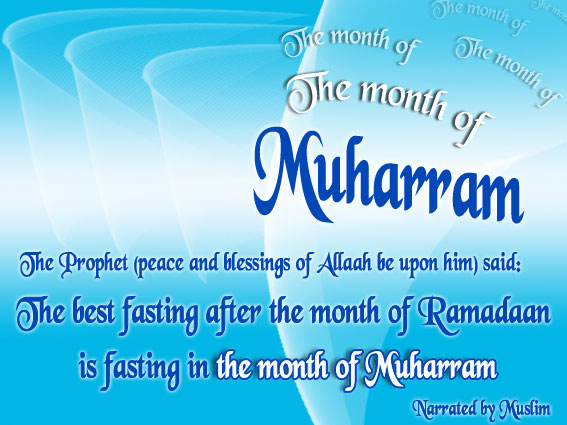
The Virtue of observing more naafil fasts during Muharram:
Abu Hurayrah radi Allaahu Anhu said: “The Messenger of Allaah sallAllaahu Alayhi wa sallam said: ‘The best of fasting after Ramadaan is fasting Allaah’s month of Muharram.’”
The phrase “Allaah’s month”, connecting the name of the month to the name of Allaah in a genitive grammatical structure, signifies the importance of the month.
This hadeeth is probably meant to encourage increasing one’s fasting during Muharram, without meaning that one should fast for the entire month.
Tuesday, July 14, 2009
Sunnahs when wearing CLOTHES
Rasulullah (SalallahuAlaihiWaSallam) loved white clothing.
When putting on any garment Rasulullah(SalallahuAlaihiWaSallam) always began with the right limb.
When removing any garment Rasulullah(SalallahuAlaihiWaSallam) always removed the left limb first.
Males must wear the clothes above the ankles and females must ensure that their lower garments cover their ankles.
Males should wear a topi or turban and females must wear scarves at all times.
When wearing shoes first wear the right shoe then left and while removing first remove left and then right.
**************************
Du'a when wearing clothes :

"All praise belongs to Allah who adorned me with clothing by which I cover (hide) my private areas and by which I obtain beauty in my life".
[Note: While removing clothing recite "Bismillah" as Satan does not look at the private parts due to this.]
(Maksudnya: "Segala puji bagi Allah yang memakaikan aku (pakaian) ini,
dan memberi rezeki kepadaku tanpa daya dan kekuatan dariku".)
When wearing new clothes
Recite:

"O Allah, all praise is to You, just as You have dressed me, I seek Your blessings of it and the blessings of what it is made of and I seek protection and Your refuge from all evil and the evil of that which it is made of".
(Mishkat)
[Maksudnya: "Ya Allah bagiMu segala pujian, Engkaulah yang memakaikannya padaku. Aku memohon kepadaMu kebaikannya dan kebaikan tujuan ia dicipta dan aku memohon perlindungan denganMu daripada kejahatannya dan kejahatan tujuan ia dicipta".]
Umar (R.A.) stated that Prophet Mohammad (SAW.) said that if a person recites the dua when dressing in new clothing and gives the old clothing in charity, then Allah will protect him both in this life and the Aakhirah and he will be under Allah's cover (i.e. he will be protected from all calamities and his sins will be hidden).
(Mishkat)
Wednesday, April 15, 2009
Sunnahs of Eating and Drinking
The first duty in Islam concerning eating is ensuring that the food is both permissible (halal) and comes from a permissible source. You should also feel satisfied with what Allah has provided you and believe that these provisions are a blessing from Allah.
The Prophet (peace and blessings be upon him) once told `Ali ibn Abi Talib (may Allah be pleased with him), "O Ali! There are twelve rules a Muslim must learn to adhere to before the table (of food), four of which are duties, four of which are Sunnah, and four of which are manners. Knowing what you eat and its source, mentioning Allah’s name prior to eating, being grateful for provisions, and being content with them are duties. Sitting on the left foot, eating with three fingers, eating from the food closer to you, and licking the fingers (used while eating) are Sunnah. Restricting the size of each mouthful of food, chewing very well, refraining from looking people in the face, and washing the hands (afterwards) are of manners."
*****************************************
1. The Holy Prophet (s.a.w) expressed dislike for over-eating and said that over-eating is ill luck and misfortune. In other words, a person who over eats will be followed by such faults and defects that he will have difficulty and hardship in every place and people will look at him in a bad way.
2. The Holy Prophet (s.a.w) used to eat with three fingers, and before wiping and cleaning his hand he used to lick his blessed fingers.
3. Whenever food is very hot, it should be left covered for a while, so that the emission of steam finishes. In doing so, the Holy Prophet (s.a.w) had said that this is a method in which barakah may be gained.
4. Hazrat Anas has mentioned that, “I once saw the Holy Prophet (s.a.w) sitting in a squatting posture and eating dates.”
5. The posture mentioned means that when one keeps his calves straight and sits on his feet.
6. Once in a gathering, the number of people eating increased, so the Holy Prophet (s.a.w) sat with his blessed legs folded (as in Attahiyyat position in Salaah), the reason being that there is humility in sitting like this and there is consideration for other people who are also present because sitting in this manner creates more room for them.
7. The people eating should not get up before the table cloth has been lifted.
8. When one is eating with another person then he should not stop eating as long as the other person is eating, even though the stomach has become full, this is so that the other person does not feel ashamed. If one has to stop eating, then he should make an excuse.
9. One should not drink from a water container by putting his mouth on it.
10. The same prohibition has been applied to placing the mouth on and drinking from a spouted jug, or a goblet meaning a long necked flask or a bottle etc.
11. One should not breathe into a utensil or blow into it. One should also refrain from placing his mouth on a utensil that is cracked or broken. Many people have the habit of standing up and drinking, one should also refrain from this act.
12. The Holy Prophet (s.a.w) never found fault with food, if he liked it then he would eat it. If he did not prefer it, then he would just leave it without complaining.
13. Hazrat Huzaifa has mentioned that the Holy Prophet prevented us from eating and drinking in gold and silver utensils. This order is for both men and women.
May Allah Taa'la give us the ability to act upon these Sunnahs of Rasullullah .
Ameen.
Ameen.
******************************************
Sunnahs of our beloved prophet Muhammad (Peace be upon him)
Sunnahs of Eating:
-----------------
1. Sit and eat on the floor.
2. Spread out a cloth on the floor first before eating.
3. Wash both hands up to the wrists.
4. Recite "Bismillah wa'la barakatillah' aloud.
5. Eat with the right hand.
6. Eat from the side that is in front of you.
7. If a morsel of food falls down, pick it up, clean it and eat it.
8. Do not find fault with the food.
9. When eating, sit with either both knees on the ground or one knee raised or both knees raised.
10. Clean the plate and other utensils thoroughly after eating.
By doing this, the utensils make dua for one's forgiveness.
11. Recite dua after eating. ( Al hamdu lillahi lazi atamana saqana wo jaalna minal musalamin )
12. After meals wash both the hands.
13. Eat with three fingers if possible.
14. One should not eat very hot food.
15. Do not blow on the food.
16. After eating one should lick his fingers.
Sunnahs of drinking:
--------------------
1. A Muslim should drink with the right hand. Shaytaan Drinks with the left hand.
2. Sit and drink.
3. Recite "Bismillah" before drinking.
4. After drinking say " Alhamdullilah" .
5. Drink in 3 breaths removing the utensil from the mouth after each sip.
6. Do not drink directly from the jug or bottle. One should pour the contents into a glass first and then drink.
Tuesday, March 24, 2009
Good deeds
Excellence of meeting with a smiling Countenance and Politeness in Speech.
Allah, the Exalted, says:
"Look not with your eyes ambitiously at what We have bestowed on certain classes of them (the disbelievers), nor grieve over them. And lower your wings for the believers (be courteous to the fellow-believers)." (Al-Hijr(15) :88)
"And by the Mercy of Allâh, you dealt with them gently. And had you been severe and harsh¬hearted, they would have broken away from about you; so pass over (their faults), and ask (Allâh's) Forgiveness for them; and consult them in the affairs. Then when you have taken a decision, put your trust in Allâh, certainly, Allâh loves those who put their trust (in Him)." (Al-Imran(3) :159)
************************
`Adi bin Hatim (May Allah be pleased with him) reported: Messenger of Allah (PBUH) said, "Guard yourselves against the Fire (of Hell) even if it be only with half a date-fruit (given in charity); and if you cannot afford even that, you should at least say a good word.''
[Al-Bukhari and Muslim].
Commentary: This Hadith highlights the point that Sadaqah has great benefits and even in its minimum scope and quantity it can ensure our safety against Hell-fire. We are told that if we do not have even a single date or half of it to give to a needy person, we can manage to have the same benefit by talking to him in a compassionate tone, provided we have Faith in our heart.
*************************
Abu Hurairah (May Allah be pleased with him) reported: The Prophet (PBUH) said, "It is also charity to utter a good word.''
[Al-Bukhari and Muslim].
Commentary: In Islam, it is not spending money alone that counts as charity; talking to somebody in a decent way also comes in the same context. Now, one can feel the importance Islam gives to moral values and good manners. This saying of Messenger of Allah (PBUH) is part of a long Hadith mentioned earlier. See Hadith No. 122.
***************************
Abu Dharr (May Allah be pleased with him) reported: Messenger of Allah (PBUH) said, "Do not disdain a good deed, (no matter how small it may seem) even if it is your meeting with your (Muslim) brother with a cheerful face.''
[Muslim].
Commentary: Every deed approved by the Shari`ah is considered good and rewarding. Howsoever seemingly small people may consider it, it must not be looked at from a highbrow angle. Even to meet people cheerfully is one of the Islamic virtues, though it may appear quite insignificant to some people.
**************************
Allah, the Exalted, says:
"Look not with your eyes ambitiously at what We have bestowed on certain classes of them (the disbelievers), nor grieve over them. And lower your wings for the believers (be courteous to the fellow-believers)." (Al-Hijr(15) :88)
"And by the Mercy of Allâh, you dealt with them gently. And had you been severe and harsh¬hearted, they would have broken away from about you; so pass over (their faults), and ask (Allâh's) Forgiveness for them; and consult them in the affairs. Then when you have taken a decision, put your trust in Allâh, certainly, Allâh loves those who put their trust (in Him)." (Al-Imran(3) :159)
************************
`Adi bin Hatim (May Allah be pleased with him) reported: Messenger of Allah (PBUH) said, "Guard yourselves against the Fire (of Hell) even if it be only with half a date-fruit (given in charity); and if you cannot afford even that, you should at least say a good word.''
[Al-Bukhari and Muslim].
Commentary: This Hadith highlights the point that Sadaqah has great benefits and even in its minimum scope and quantity it can ensure our safety against Hell-fire. We are told that if we do not have even a single date or half of it to give to a needy person, we can manage to have the same benefit by talking to him in a compassionate tone, provided we have Faith in our heart.
*************************
Abu Hurairah (May Allah be pleased with him) reported: The Prophet (PBUH) said, "It is also charity to utter a good word.''
[Al-Bukhari and Muslim].
Commentary: In Islam, it is not spending money alone that counts as charity; talking to somebody in a decent way also comes in the same context. Now, one can feel the importance Islam gives to moral values and good manners. This saying of Messenger of Allah (PBUH) is part of a long Hadith mentioned earlier. See Hadith No. 122.
***************************
Abu Dharr (May Allah be pleased with him) reported: Messenger of Allah (PBUH) said, "Do not disdain a good deed, (no matter how small it may seem) even if it is your meeting with your (Muslim) brother with a cheerful face.''
[Muslim].
Commentary: Every deed approved by the Shari`ah is considered good and rewarding. Howsoever seemingly small people may consider it, it must not be looked at from a highbrow angle. Even to meet people cheerfully is one of the Islamic virtues, though it may appear quite insignificant to some people.
**************************
Monday, March 9, 2009
PROPHET MUHAMMAD (PBUH): THE MODEL OF GOODNESS

(12 Rabiulawal)
The behavior and personality of Prophet Muhammad (pbuh) are the best examples to follow in Life. A companion of his, who spent full ten years with him, has said:
"Throughout my stay with him I never heard an indecent word from his lips and never found him rude to anyone. Prophet Muhammad (pbuh) spoke very politely. Prophet Muhammad (pbuh) was kind to everyone."
Although Prophet Muhammad (pbuh) was the Prophet of Allah and had been appointed by Allah to guide the people, yet he was not ashamed of doing his work with his own hands. Prophet Muhammad (pbuh) assisted the members of his family in household work and performed the jobs of other persons with great pleasure. Prophet Muhammad (pbuh) mended his clothes and shoes. He also took part in the construction of Masjid al-Nabi in Medina along with his companions.
His dress was always clean, though simple. Prophet Muhammad (pbuh) was very mindful of cleanliness. Prophet Muhammad (pbuh) washed his hands and mouth before and after taking his meals.
Prophet Muhammad (pbuh) was so kind and generous that he never refused a reasonable request of any person. Prophet Muhammad (pbuh) often distributed edibles among others and went without meals himself. Prophet Muhammad (pbuh) always helped the needy and the poor and went to the houses of the sick to enquire after their health.
Whenever he met anyone he said, 'Salamun Alaikum'. Prophet Muhammad (pbuh) always spoke with a smiling face.
Prophet Muhammad (pbuh) was a model of all the virtues and qualities of a believer described in the Noble Qur'an. None can describe him better than Allah who has said he possessed the noblest character.
"Certainly you have in the Messenger of Allah an excellent exemplar for him who hopes in Allah and the latter day and remembers Allah much." Noble Qur'an (33:21)
"And thou (Muhammad) (standest) on an exalted standard of character." Noble Qur'an (68:4)
"And We have not sent you but as a mercy to the worlds." Noble Qur'an (21:107)
Prophet Muhammad (pbuh) has said, "I have been sent only for the purpose of perfecting good morals".
Prophet Muhammad (pbuh) has said, "The best of you are those who have the best morals".
Prophet Muhammad (pbuh) has said, "You cannot treat people by means of your wealth; hence, you should treat them by means of your moral conduct".
Prophet Muhammad (pbuh) has said, "The most (important) things that cause people to reach Heaven are divine piety and a good temper".
Wednesday, February 4, 2009
THE GIFT
Whenever they reaped their first harvest, they brought early, fresh fruits to the Prophet Muhammad, peace be upon him (pbuh). Then he would distribute them among those who sat around him.
This morning, a poor man brought one fruit from his small farm and gave it to the Prophet Muhammad (pbuh).
The Prophet Muhammad (pbuh) accepted the gift, tasted it and then went on eating it alone while the companions watched. One of those present meekly said: "O Messenger of Allah, you have over looked the right of those who watch while you eat?"
The Prophet Muhammad (pbuh) smiled and waited till the man who had brought the fruit had gone.
Prophet Muhammad (pbuh) said:
"I tasted the fruit and it was not yet ripe. Had I allowed you to have some of it, someone would have definitely shown his distaste, thus disappointing the poor man who had brought the gift. Rather than make him feel better, my palate accepted the bitterness."
This morning, a poor man brought one fruit from his small farm and gave it to the Prophet Muhammad (pbuh).
The Prophet Muhammad (pbuh) accepted the gift, tasted it and then went on eating it alone while the companions watched. One of those present meekly said: "O Messenger of Allah, you have over looked the right of those who watch while you eat?"
The Prophet Muhammad (pbuh) smiled and waited till the man who had brought the fruit had gone.
Prophet Muhammad (pbuh) said:
"I tasted the fruit and it was not yet ripe. Had I allowed you to have some of it, someone would have definitely shown his distaste, thus disappointing the poor man who had brought the gift. Rather than make him feel better, my palate accepted the bitterness."
Sunday, February 1, 2009
Sunnahs of Sleeping/Awakening
Sunnahs of our beloved prophet Muhammad (Peace be upon him)
Sunnahs of Sleeping:
To sleep in the state of Wudu'(Ablution).
To make the bed yourself.
Dust the bed thrice before retiring to bed.
One should change into some other clothes
(e.g.pyjamas) before going to sleep.
It is Sunnah to sleep immediately after Isha Salaah.
To apply surmah in both the eyes.
To brush the teeth with a miswaak.
To sleep on the right hand side.
To sleep with the right palm under the right cheek.
To keep the knees slightly bent when sleeping.
To refrain from sleeping on ones stomach.
To sleep on a bed or to sleep on the floor are both sunnah.
To face Qiblah.
To recite Surah Mulk, before sleeping.
To recite Ayatul Kursi.
To recite Surah Ikhlaas, Surah Falaq and Surah Naas before sleeping 3 times and thereafter blow over the entire body thrice.
Recite Tasbeeh-e-Fathima before sleeping.( i.e. 33 X
Subhan Allah 33 X Alhamdulillah and 34 X AllahuAkbar).
To recite the dua before sleeping.
To wake up for Tahajjud Salaah
*********************
Sunnahs on Awakening:
On awakening rub the face and the eyes with the palms of the hands in order to remove the effects of sleep.
When the eyes open in the morning say "Alhamdulillah" thrice and then recite Kalimah-e-Tayyibah
Thereafter recite the dua on awakening.
On awakening cleanse the mouth with a miswaak.
Sunnahs of Sleeping:
To sleep in the state of Wudu'(Ablution).
To make the bed yourself.
Dust the bed thrice before retiring to bed.
One should change into some other clothes
(e.g.pyjamas) before going to sleep.
It is Sunnah to sleep immediately after Isha Salaah.
To apply surmah in both the eyes.
To brush the teeth with a miswaak.
To sleep on the right hand side.
To sleep with the right palm under the right cheek.
To keep the knees slightly bent when sleeping.
To refrain from sleeping on ones stomach.
To sleep on a bed or to sleep on the floor are both sunnah.
To face Qiblah.
To recite Surah Mulk, before sleeping.
To recite Ayatul Kursi.
To recite Surah Ikhlaas, Surah Falaq and Surah Naas before sleeping 3 times and thereafter blow over the entire body thrice.
Recite Tasbeeh-e-Fathima before sleeping.( i.e. 33 X
Subhan Allah 33 X Alhamdulillah and 34 X AllahuAkbar).
To recite the dua before sleeping.
To wake up for Tahajjud Salaah
*********************
Sunnahs on Awakening:
On awakening rub the face and the eyes with the palms of the hands in order to remove the effects of sleep.
When the eyes open in the morning say "Alhamdulillah" thrice and then recite Kalimah-e-Tayyibah
Thereafter recite the dua on awakening.
On awakening cleanse the mouth with a miswaak.
WEALTH AND POVERTY
It was a usual meeting. The Prophet Muhammad, peace be upon him(pbuh) was in his place and his companions gathered around him to hear the words of wisdom and guidance. Suddenly a poor man in rags appeared, saluted the assembly:
"Salamun Alaikum" (Peace be on you)
And finding a vacant place comfortably sat down.
The Prophet Muhammad (pbuh) had taught them that all Muslims were brothers and in an assembly one should sit wherever one finds a place, regardless of any status. Now, it so happened that this poor man was seated next to a very rich man. The rich man felt very disturbed and tried to collect the edges of his dress around himself, so that the poor man didn't touch them. The Prophet Muhammad (pbuh) observed this and addressing the rich man, Prophet Muhammad (pbuh) said:
"Perhaps you are afraid that his poverty would affect you?"
"No, O Messenger of Allah," he said.
"Then perhaps you were apprehensive about some of your wealth flying away to him?"
"No, O Messenger of Allah," he replied.
"Or you feared that your clothes would become dirty if he touched them?"
"No, O Messenger of Allah."
"Then why did you draw yourself and your clothes away from him?"
The rich man said:
"I admit that was the most undesirable thing to do. It was an error and I confess my guilt. Now to make amends for it I will give away half of my wealth to this Muslim brother so that I may be forgiven."
Just as he said this, the poor man rose and said,
"O Messenger of Allah, I do not accept this offer."
People present were taken by surprise, they thought that the poor man was a fool, but then he explained:
"O Messenger of Allah, I refuse to accept this offer because I fear that I might then become arrogant and ill-treat my Muslim brothers the way he did to me."
Subscribe to:
Posts (Atom)
LinkWithin
